

Written by Julian Rishwain
I know how that sounds. Trust me — I’ve thought about it a hundred times since. But it’s the truth, and it’s a truth I think more athletes carry than anyone ever admits.
This was my third year at the University of San Francisco and fourth year of college — where I got to a place so dark, so far from the game I grew up loving, that I genuinely hoped I would get hurt just so I had a reason to stop playing.
Athletes aren’t supposed to talk about this. We’re taught that struggle is something you push through, not something you name. And on the outside, nothing looked wrong — I was showing up, competing, putting in the work. But the mental load of college basketball had been quietly building for years. The pressure to perform, to prove yourself, to hold your spot, to have a season good enough that the money and the opportunities would follow — it doesn’t announce itself. It just accumulates. And by that year, I was buried under it without anyone knowing.
Everything Was Supposed to Come Together
To understand where I ended up, you have to understand where I was coming from.
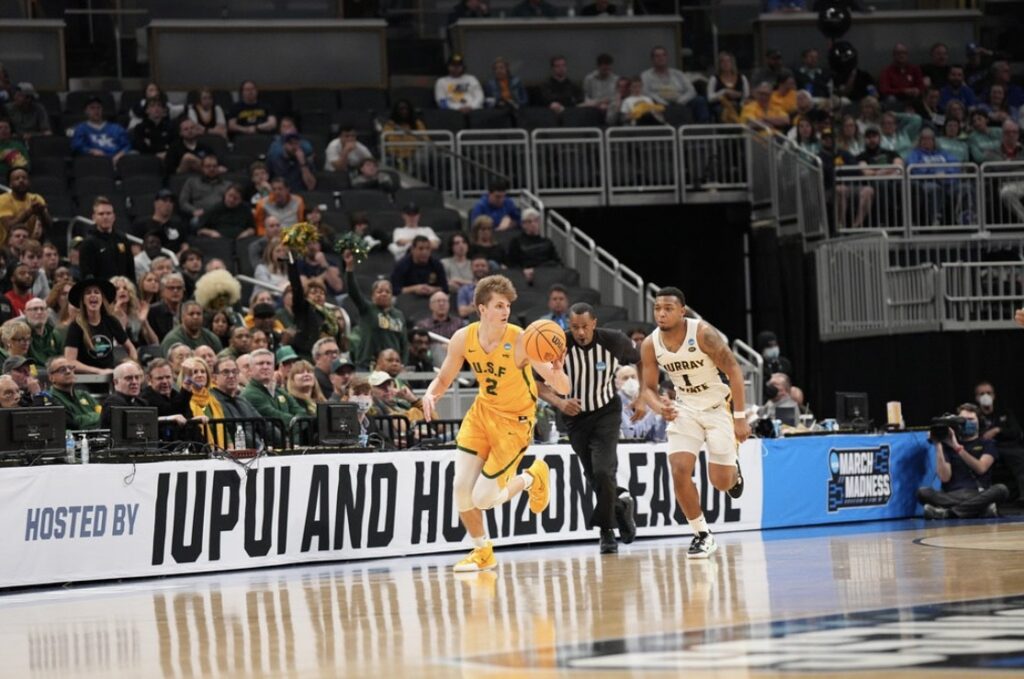
The year before, I’d been a key piece of a team that made the NCAA Tournament for the first time in over 25 years. I led the entire NCAA in three-point percentage through the first 12 games of the season and finished the year shooting 43% behind the arc. I had multiple double-digit scoring outings, and I ended the year dropping 20 on the number one team in the country — Gonzaga — in the conference tournament. In the March Madness game itself, I played the most minutes I had all year. This was the end of my junior year and the best season I’d played in college. I had real momentum.
After that, our head coach Todd Golden left for the University of Florida, and our assistant stepped into the head role. I was entering my senior year with the ability to graduate transfer the following season. This was supposed to be the year I took control — one of the main guys, leading the way.
I had worked harder that summer than I ever had in my life. Two-a-days with my brother, on top of team workouts and lifts. I was ready.
But before the season even started, my head was already somewhere it shouldn’t have been.
NIL was picking up, and I knew there was money out there — but it wasn’t as prevalent as it is now. I didn’t ask for it. I was nervous about creating tension with a new coaching staff, didn’t want that to be the first conversation I had with my new head coach. I told myself that if I had a great year, there’d be plenty of opportunity as a grad transfer. But watching some of my teammates seemingly get paid while I didn’t — that jealousy crept in whether I wanted it to or not. The coaches also brought in two new guards through the portal that summer, both ball-dominant guys competing for minutes in my space. And although I was more of a wing, the competition was real.
Summer workouts went the way they usually do — guys fighting to carve out a role, competition high. Even though I was training harder than ever, my performance in those workouts wasn’t reflecting it. I left the summer not feeling as confident as I wanted to.
Then the school year started. At our preseason conference media day, I wasn’t one of the three players chosen to represent the team. I let it get to me more than I should have.
I set up a meeting with the coach. He talked me down, said I’d be part of the next event, that I was still one of his core guys. Fine. But the damage was done. That small thing confirmed something I was already afraid of — that he didn’t truly see me as one of the main guys.
So that’s how I walked into the season. Head full of noise. NIL, summer workouts, jealousy, the portal, my role — everything except the simplicity of basketball.
The Spiral
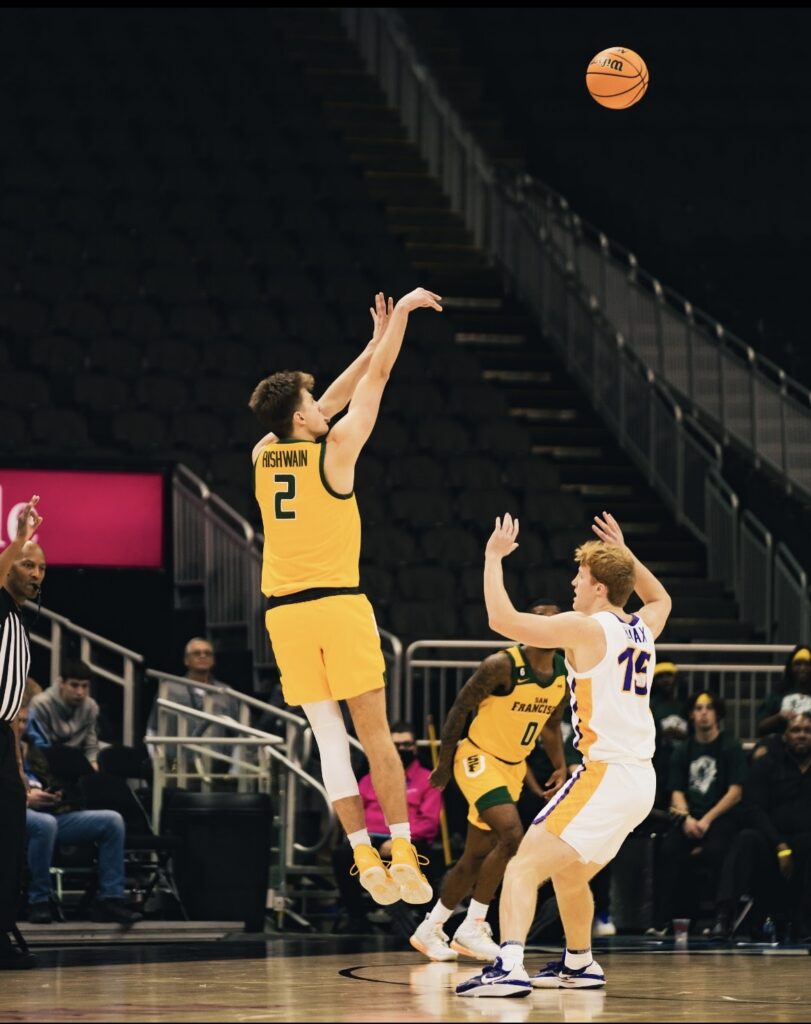
I started the year terribly. Shooting splits were way down from the year before. Every shot I took felt like a job interview — like my teammates and coaches were grading and judging me, deciding in real time whether I was the shooter they believed in. The more I thought that way, the more I’d miss. And the more I missed, the deeper I fell into this pit.
Practices were the worst. Palms sweaty, legs heavy, arms tight on every shot. For some reason, without the speed and commotion of a live game, those practice shots felt even more intense than the games themselves. Needless to say, neither was going well. I ended up losing my starting spot — rightfully so. It got to the point where I couldn’t bring myself to watch film, because rewatching those misses would make me relive the exact feeling I was trying to escape — hands and feet would get sweaty, that dread settling back in before I’d even pressed play. I’d also do anything to avoid seeing my shooting percentages on the ESPN app or the stat sheets after games.
My worth on the court became about making shots. And somewhere along the way, my worth as a person did too.
I’d played basketball my whole life. I was “the basketball player” to my family, my friends, my teammates — and I was okay with that as long as I was performing. But when that part of me stopped functioning, I didn’t know who I was without it.
My family tried everything. My mom texted me mindset quotes every single morning. My brother sent motivational messages and picked out small positives from the game before just to give me something positive to hold onto. My girlfriend would talk me through breathing exercises before games. And my dad, who had been through it all with me up to that point, would put his arm around me on the walk home after a bad night and just repeat: “You need to let it all go, son.” I felt every bit of that support. But the thing about performance anxiety is that it’s a process — not a switch. I’d feel better in the moment. And then I’d step back on that court and become the same tense, nervous version of myself again.
The only time I could actually disconnect was under my covers watching The Sopranos. I coincidentally started a show during the hardest stretch of my life about a man living a double life. Tony Soprano was the mob boss of Jersey — tough, commanding, confident, the guy everyone looked to. But behind closed doors he was quietly falling apart. Panic attacks. Anxiety he had to hide from his world just to keep functioning in it.
I was consumed by that show. Not just as entertainment — as company. Didn’t matter how bad practice or the game had been for me — under those covers, I didn’t have to be the basketball player who couldn’t make a shot.
I connected with Tony more than I want to admit. He carried himself like nothing could touch him — and then went home and couldn’t breathe. That was me. And honestly, looking back, I almost wish he was a real person I could’ve sat down with. Not for advice — just someone who knew what it felt like to carry something heavy while the world expected you to be fine. Someone who’d been through it and could say: yeah, I know exactly what that feels like.
But inside, I had gotten to a place where I was wishing for an injury.
Not a serious one — I don’t even know exactly what I imagined. But I needed a physical reason to step away. Asking for time off never even crossed my mind as an option. It felt weak. Like quitting. I needed something external to give me permission to stop. And it’s messed up to say out loud, but that thought came more than once.

And Then It Happened
The game before, I’d had my season high — 18 points against LMU, made a bunch of winning plays on the road to seal the victory. For one night, I felt like myself again. I thought maybe it was a turning point.
It wasn’t.
The very next game, against the University of Portland, I came in confident — fired up early, missed my first few shots, and watched whatever was left of my confidence drain out of me. Another typical night for this season.
And then the game came down to the wire. We were down one. About a minute left. My teammate drove the lane and kicked it out to me in the corner — open three. That one moment captured my entire season. My coach trusted me enough to have me on the court. My teammate trusted me enough to pass me the ball. That was the approval I’d been chasing all year, handed to me right there.
And in that split second my mind was already spiraling — not about making the shot, but about missing it. What it would mean. Another bad percentage. Another night to forget. My body was so tense, so wound up from months of that same mental loop, that when I planted to pass, something gave.
ACL and meniscus. Torn.
I’ll never know for certain. But I’ve thought about it a lot. When your mind has been running that hard for that long — the anxiety, the dread, the tension you carry into every single rep — I don’t think it’s crazy to believe the body eventually pays the price. My mind was so exhausted, so beaten down, that maybe it just gave out first.
The Feeling I’m Most Ashamed to Admit
The injury itself was devastating. The outlook. Year-long recovery. Surgery. All of it.
But the first game after — sitting on that bench in a brace, not suited up — I felt something I wasn’t prepared for.
Relief.
The internal pressure that had been sitting on my chest for months, the knot in my stomach before every practice and every shot and every game — it just lifted. The thing I’d wished for had happened. And I finally got to let it all go.
It took me a long time to sit with that and not feel ashamed of it. Because what it really meant was that I had gotten so lost inside my own head that an injury felt like the only exit. And I had never told anyone that. Not my coaches. Not my teammates. Not my sports psychologist. Not even my family. I suffered quietly. And I kept showing up. Because that’s what athletes do.
What I Want You to Take From This
This isn’t a story about my ACL. It’s a story about what happens when you let everything pile up in silence.
Your sport can become a prison without anyone putting you there. NIL pressure, roster competition, performance anxiety, the fear of losing your identity — these things are real and they compound quietly. You can be the hardest worker in the room and still be falling apart inside. You can be showing up every day and still be suffocating.
There’s no secret recipe to lift performance anxiety or the mental toll that sports puts on you. I say this to any one who is going through it. Its a process. — an ongoing one, and it looks different for every athlete.
For me, I think what it really came down to was detachment. Athletes can get so consumed by their sport that they lose themselves inside it. I had lost my why. I was chasing money and opportunity instead of the thing that got me here in the first place — a love for the game.

I didn’t need an injury. I needed permission to struggle out loud.
So if you’re in a dark place right now — if you’ve had a thought that scares you, if the game you love has started to feel like something you dread — please hear this: you don’t need a physical reason to ask for help. Mental exhaustion is real. The weight and feelings you’re carrying are real.
Lean on your support system — whoever that looks like. A teammate, a family member, a mentor, a professional. I wish I had leaned on mine more instead of bottling it all up. Find community in spaces like this one, where other athletes are sharing the same honest, ugly truths. Because I promise you are not the only one.
Remember why you started. Remember the little kid in you who fell in love with the sport. Not the NIL. Not the stats. Not the status. The feeling of joy the game brought you when everything else is out of your control. That’s still in there.
And take time away if you need it. Don’t wait for your body to make that decision for you.
I did go on to recover from that injury. I went on to play some of the best basketball of my career. I rediscovered that mental drive and love for the game. But it takes time — it’s a process, and it looks different for every athlete.
I just wish someone had told me earlier that stepping back wasn’t weakness. That asking for help wasn’t weakness. That suffering in silence — grinding through it alone — wasn’t toughness.
Toughness is honesty. Toughness is asking for help when you need it.
Your story isn’t finished yet. And neither is mine.
— Julian Rishwain
Journey of a Hooper