
By Alicia Liu, Rhythmic Gymnast
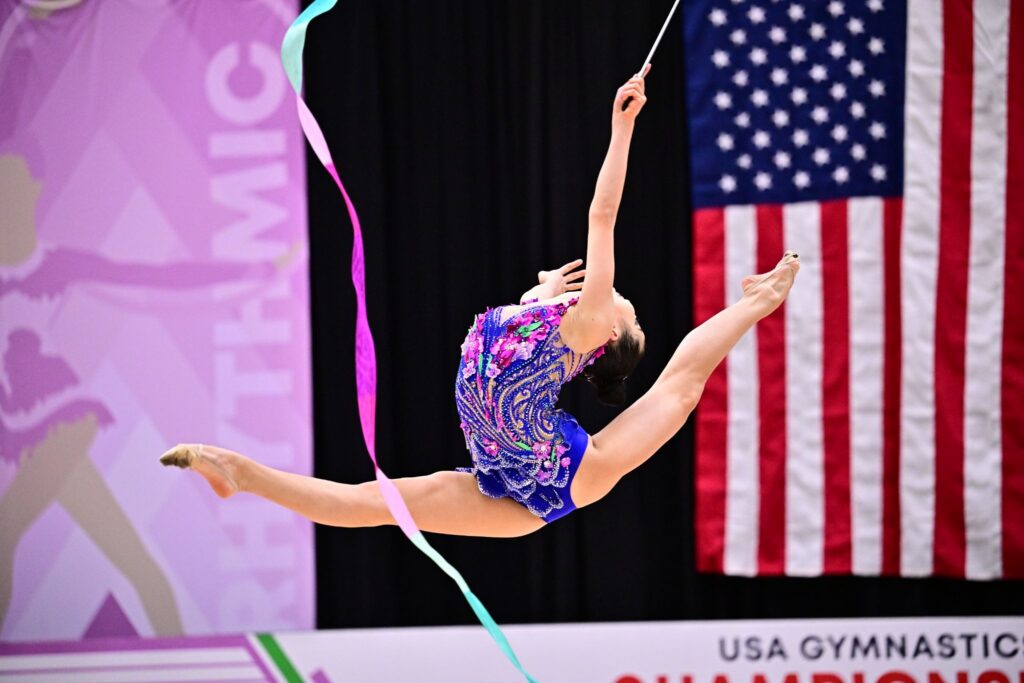
When I step on the stage, everything is quiet. An exhilarating thrill fills my chest so much so that I feel as if I am a part of something greater than myself. When the music starts, the background fades away and it becomes just me and my apparatus. A symbiotic dance where movements blend together, girl and apparatus are one, and the music becomes the sole soundtrack to this defining moment. My body knows what to do, after weeks, months, years of training. When the music stops and I finish my routine, the thrill in my chest deflates and I am left sweaty and my heart beating furiously. These moments offer a brief glimpse into the excitement of competing and sports.
For a majority of my life, the key defining thing about me was that I was a Rhythmic Gymnast. I started gymnastics when I was 6 and it has stuck with me ever since. I loved the sport for its beauty and for the enjoyment it gave me, as it was the only place where I felt truly seen. Before gymnastics I felt like nobody– a name skipped over during attendance; I was just another ordinary kid. Rhythmic Gymnastics offered me a way to become somebody with consequence: a person worth acknowledging. With this dependent relationship established, gymnastics became my life and my obsession. Soon, my abilities to perform in gymnastics became closely tied with my self-worth, my self-esteem, and my perception of who I was as a person.
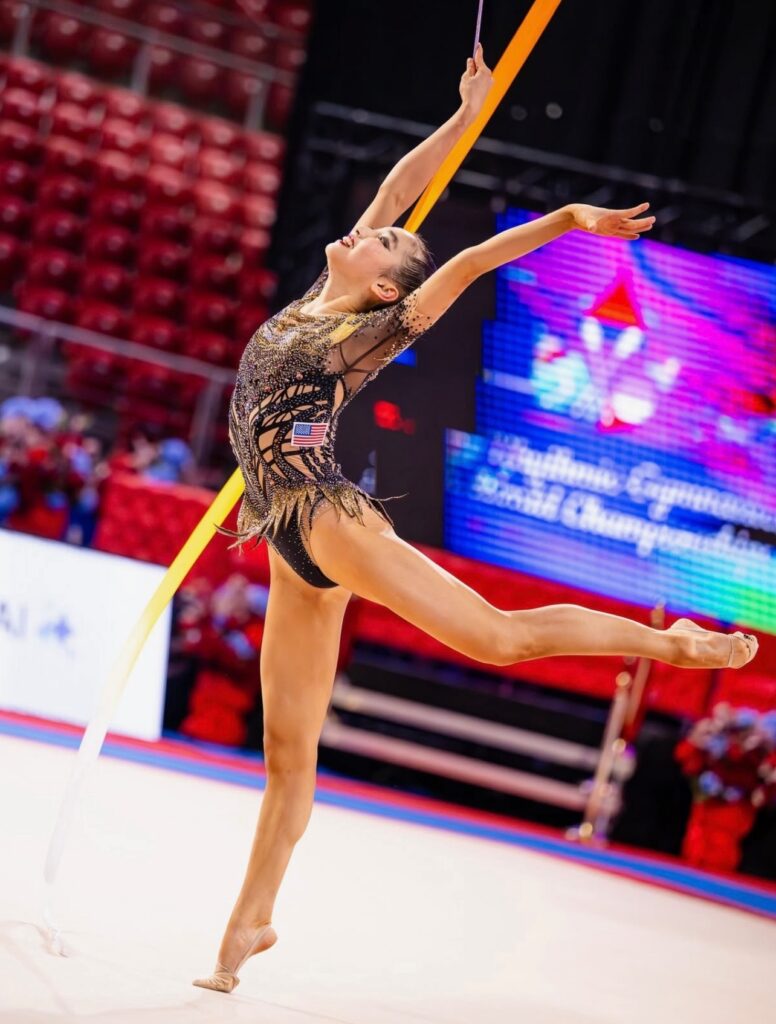
As I got older I started growing, as normal children do, the only problem was that gymnastics was a sport that was defined by aesthetics. Growing and gaining weight was a fact I was painfully aware of. I remember weighing myself twice every day, once in the morning and another time after practice and obsessing over every pound I gained or lost.
There was a constant fear of eating too much and not working hard enough at practice. I was in a perpetual state of anxiety and stress, as the voices in my head got louder and louder. Constantly plagued by thoughts about losing weight, what I should eat for each meal, and what my coaches and parents would think of me, I felt trapped. Sometimes it felt as if my performance in gymnastics was tied purely to how I looked, and somewhere along the way, my worth as a person became defined by it as well.
The worst part was that I had felt so utterly alone in these struggles. In the elite level I was competing in, to ask for help or to say “I’m tired” was met by severe deprecation. I was also embarrassed to admit to someone else that I struggled with something so trivial as food, condemning myself to a prison built by my own mind.
I remember some days at practice when I felt ‘big’ or ‘heavy’ I would be less motivated to work, which turned into this cycle of negative emotions. My head wasn’t in the right place and I was falling out of love with the sport that was something I loved so much. Competitions became less meaningful and I found myself questioning what the point of it all was. What was the joy of one moment standing on the podium, if it stemmed from weeks, months, years of hating myself and being trapped inside my own head. I wanted a way out – I wanted to find who I was outside of gymnastics, as a person, not just a gymnast.
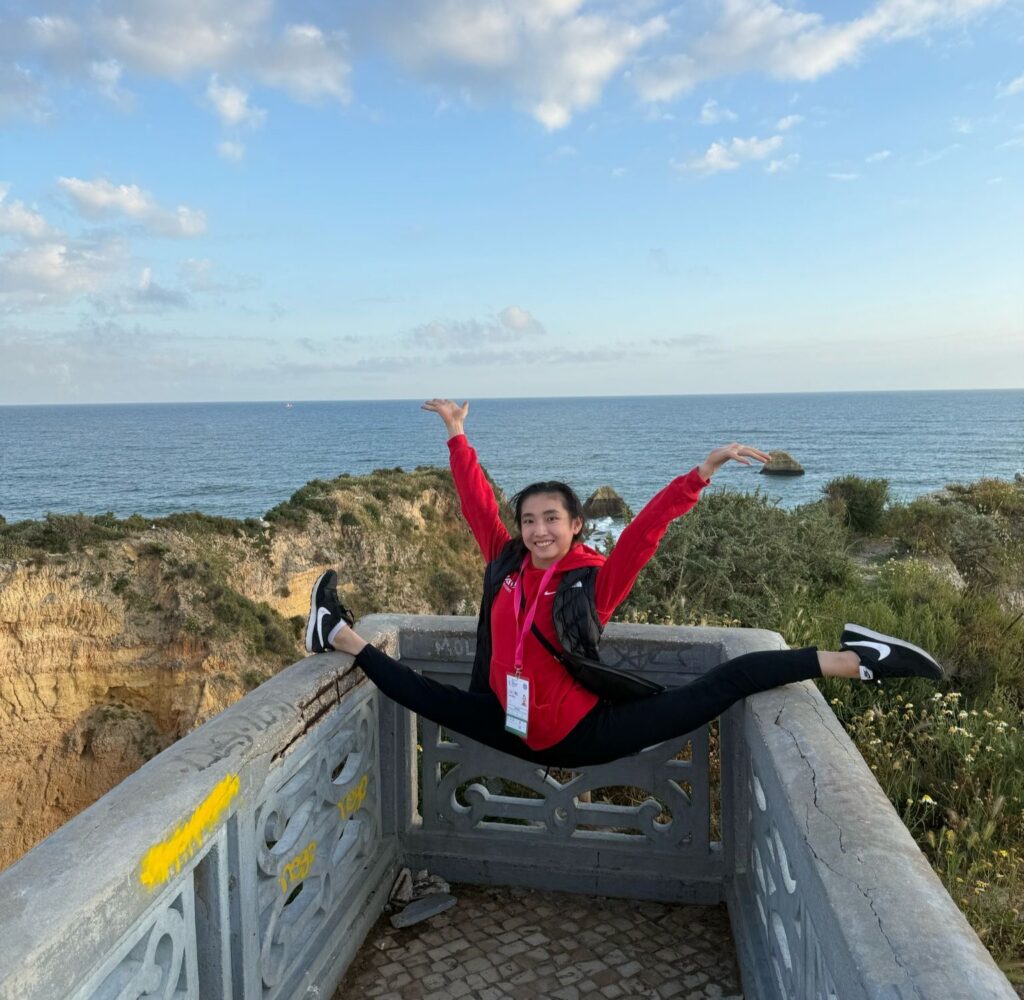
After much thought and deliberation, I decided to step away from the sport. It felt like the only way to reclaim my identity and break free from the anxiety and negative emotions plaguing me. I wanted to be seen for more than just how skinny or how fat I was. Stepping away helped me see that I was worth more than my status as an athlete.
I don’t think I regret stepping away from gymnastics, I think I needed some time for myself. However, for those struggling in the same way, maybe if things had been different, if there had been a way to break the stigma surrounding eating disorders, and the toxic culture surrounding training and body image it would help those athletes to reignite the flame that once burned so brightly.
I hope that young athletes can understand that they are more than just their sport, and that to ask for help is the strongest and bravest thing you can do.