

Psychology Today, David Udelf Psy.D. When their sports career ends, young people sometimes face real anguish.
Psychology Today, David Udelf Psy.D. When their sports career ends, young people sometimes face real anguish.
Psychology Today, David Udelf Psy.D. How to deliver criticism and instruction to athletes that will be heard and used.
Psychology Today, Tess M. Kilwein PhD, ABPP, CMPC For youth, sport should build joy and growth before it becomes about outcomes.

Psychology Today, David Udelf Psy.D. The importance of being receptive to critique from coaches and other sources.

USA Today, Stephen Borelli We can all better understand what our kids are going through with sports.

Psychiatric Times, Derek H. Suite, MD, MS, Mena Mirhom, MD, FAPA, Roy Collins, MD, MPH Elite coaches often run on severe sleep loss, risking impaired decisions, emotion control, and leadership.
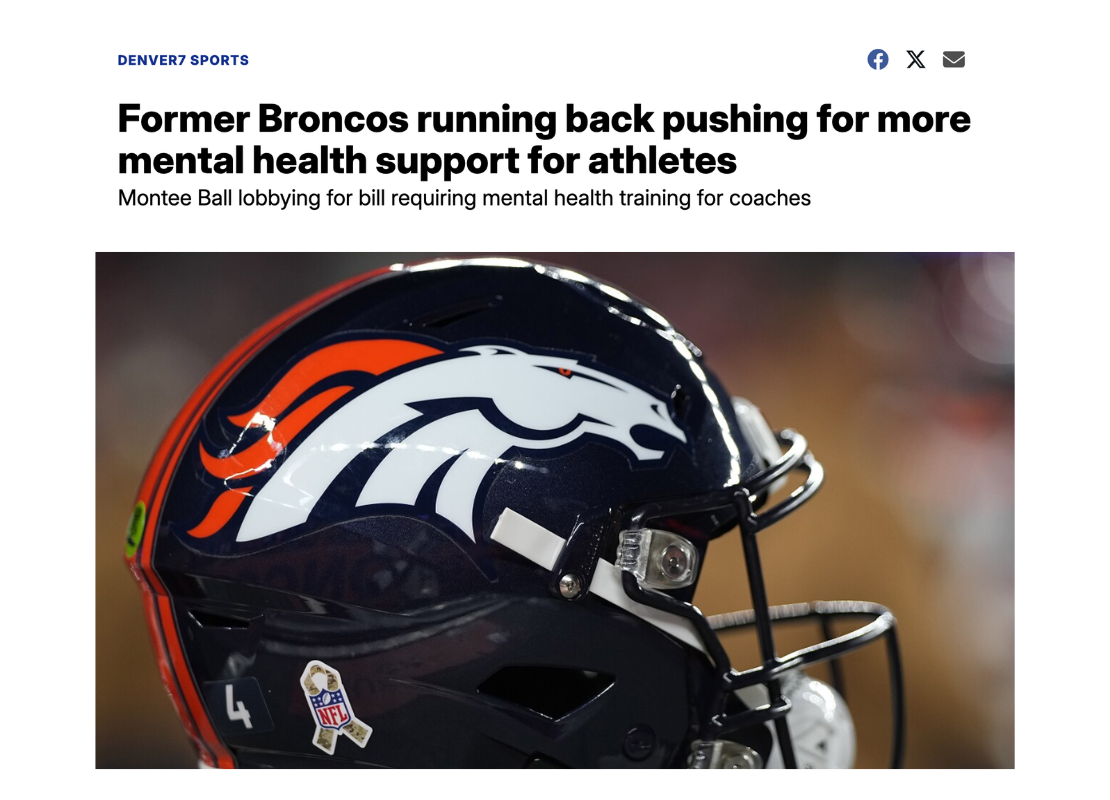
Montee Ball lobbying for bill requiring mental health training for coaches

Coaches who focus on keeping their body language positive can create a sense of confidence, encouragement, warmth, openness, belonging, and trust amongst their athletes.
Coaching others requires presence, clarity and emotional steadiness—but that doesn’t mean coaches aren’t immune from burnout themselves.

Here are four ways to take care of your mental health as a student athlete.

If balancing athletics and your regular life feels hard or overwhelming, you are not alone and there are things you can do to relieve that pressure.

This toolkit was developed with input from experts to equip you with the knowledge and resources to respond confidently and effectively when concerns about eating disorders arise.

A trusted, caring adult can be a game changer for young people, and coaches are ideally positioned to provide that support.

The NCAA Coaches Assist for Empathic Response training video is designed to provide coaches with communication tools to have meaningful conversations about mental wellness with the student-athletes on their team…

It’s important for coaches to model actions that create a positive sports environment by treating officials with understanding and dignity.
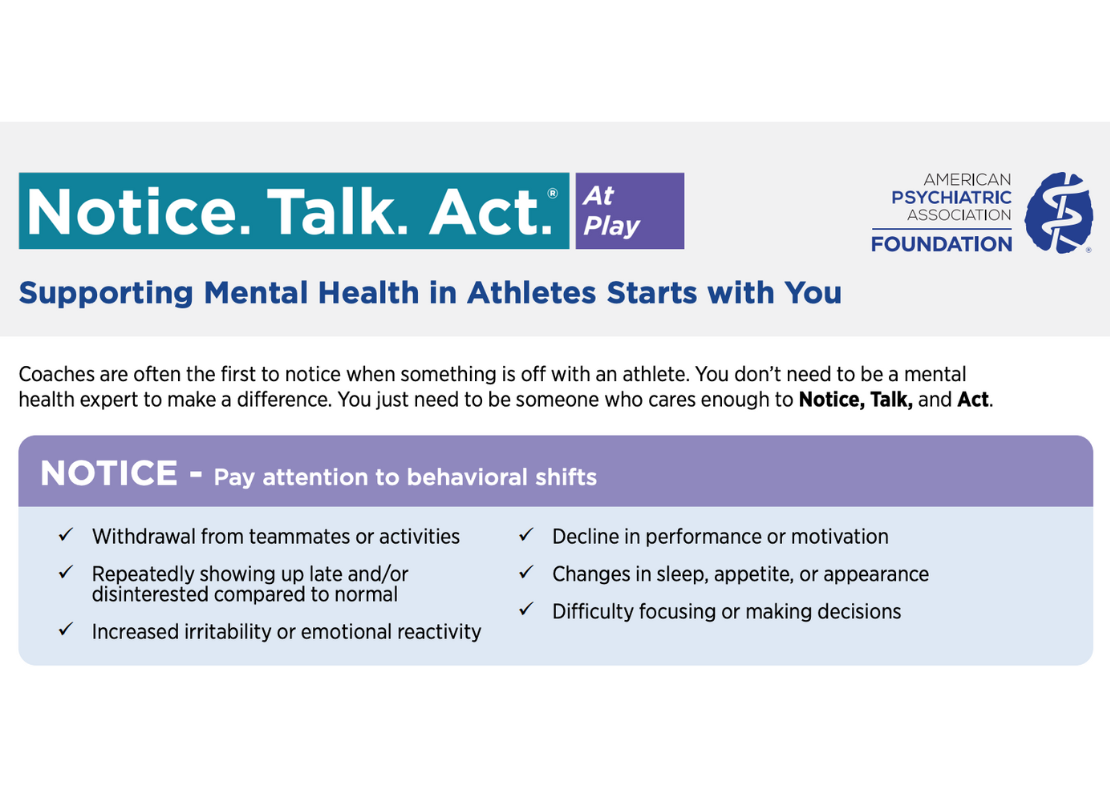
Coaches are often the first to notice when something is off with an athlete.