
By Jason Belinkie CEO, Athletes for Hope
Twenty years ago, if you had told me that Athletes for Hope would one day educate more than 13,000 athletes across nearly every sport in this country, I would have been grateful — and probably a little overwhelmed. But if you had told me why we would still be doing this work two decades later, I would have nodded immediately.
Because the “why” has never changed.
Athletes for Hope was founded in 2006 on a simple but powerful belief: athletes have the transformative ability to make the world a better place, and they deserve the education, tools, and support to do that well.
Our very first empowerment workshop set the tone for everything that followed. It was with the U.S. Women’s National Soccer Team. At the time, women’s soccer was still fighting for the visibility and respect it deserved. The players were talented, driven, and deeply connected to their communities — but few of them had the national platforms they do today.
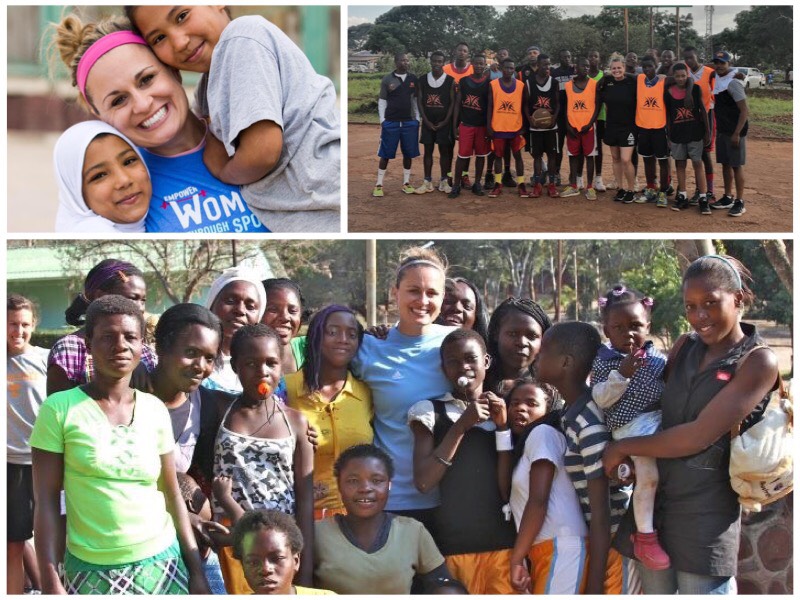
I remember one conversation from that workshop as clearly as if it happened yesterday. A young forward named Abby Wambach spoke up and said: “People might not know me on a national scale like some of my teammates yet, but when I go back and visit with kids in my hometown of Rochester, New York, I can reach them in ways that even a huge national celebrity might not be able to. By showing up for kids who are in the same position as I used to be, I know I can make a huge difference in their lives.”
That insight stopped the room.
It was such a simple truth — and such a profound one. Impact doesn’t start with fame. It starts with presence. It starts with showing up.
Of course, today Abby Wambach is known just about everywhere. But that mindset — that athletes don’t need to wait until they’re “big enough” to give back — remains at the heart of Athletes for Hope.
Over the past 20 years, the world has changed in ways none of us could have predicted. Social media has transformed how athletes connect with fans. NIL has reshaped college sports. Conversations around mental health, social justice, and equity have become louder, more urgent, and more complex. The definition of “platform” itself has expanded beyond stadiums and TV screens.
And yet, at our core, what we do hasn’t changed.
We educate athletes.
We inspire athletes.
And through them, we positively impact kids and underserved communities.
That education matters more than ever.
Athletes are often told to “use your platform,” but rarely are they taught how — how to identify causes that genuinely resonate with them, how to engage interactively with communities, how to give in ways that are sustainable, ethical, and aligned with who they are as people, not just performers.
At Athletes for Hope, we’ve spent two decades filling that gap.
We’ve led empowerment workshops with NFL teams, NBA teams, WNBA teams, NWSL clubs and more. We’ve worked with Team USA athletes, with college programs, with soon-to-be NFL rookies at the Senior Bowl, and with veterans nearing the end of their careers. We’ve sat in locker rooms, conference rooms, classrooms, and Zoom rooms — across nearly every sport and in communities all over the country.
No matter the setting, the questions are remarkably consistent:
Where do I start?
How do I know if an organization is doing good work?
How can I give back without burning out or getting it wrong?
Those questions are exactly why education is essential. While passion is important, it isn’t enough on its own. Good intentions need guidance. And athletes deserve a roadmap for how to turn caring into meaningful, lasting impact.
Looking back, I’m incredibly proud of the numbers — more than 13,000 athletes educated, countless kids reached, thousands of service hours logged. But I’m even more proud of the quieter moments: the athlete who volunteers in their hometown because of a workshop conversation; the team that rallies around a local school; the player who discovers that giving back doesn’t distract from performance, but actually deepens purpose.
Twenty years in, my belief is stronger than ever. When athletes are educated and empowered to give back, the impact ripples far beyond any single game, season, or career. It reaches families, neighborhoods, and future generations.
The world may look very different than it did in 2006. But the heart of Athletes for Hope remains the same: a steadfast commitment to helping athletes use their influence — whether local or global — to make the world better for everyone.
And if the next 20 years are anything like the first, it all starts the same way it always has.
With showing up.