
By Kaitlyn Lyle Former Gymnast and Athlete Mental Health Alliance Athlete Advisory Committee Chair
Kaitlyn is a former Division 1 gymnast and a graduate of the University of California, Davis, with a degree in Psychology and double minors in Education and Spanish. She is committed to being a voice for athletes of all backgrounds and levels, advocating for their mental well-being and representation within the sports world and beyond.

Mental health and performance are deeply connected. Can you recall a time when ignoring your mental health actually affected your athletic performance in a tangible way?
This story explains just how connected mental health and performance are.
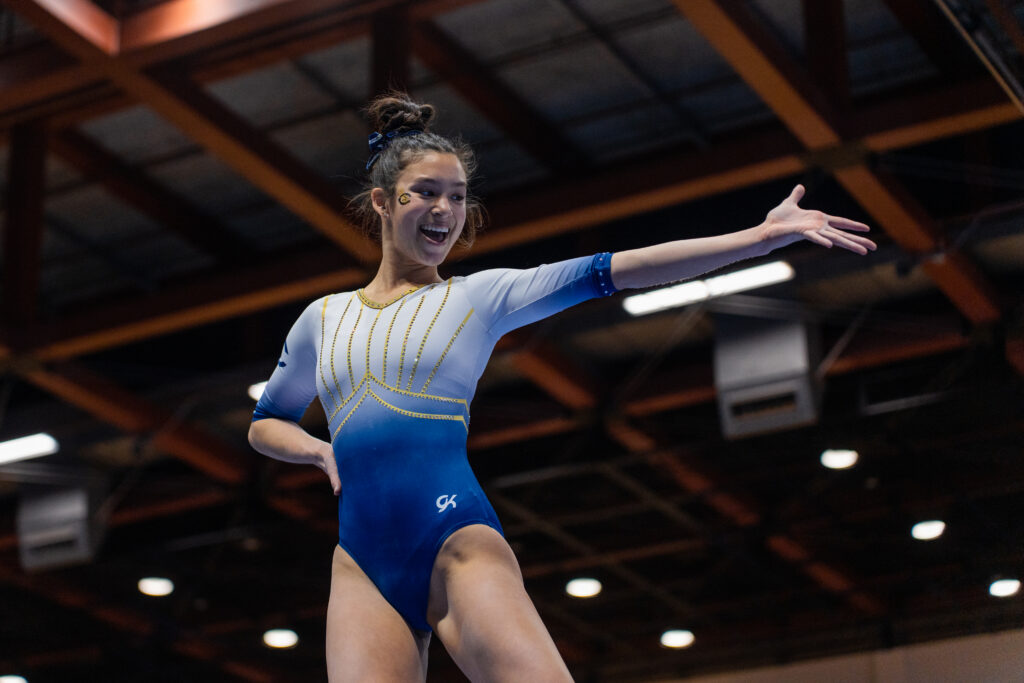
In my junior year of college, my grandpa passed away right before the season was starting. I struggled, bad. I had never dealt with such a complicated emotion like grief, and I didn’t even know where to begin the healing process. Because the season was just starting and I was team captain, I felt like I had to be the perfect role model and leader for this group of girls, even when I wasn’t sure how to take care of myself during this time. I remember not being able to eat, feeling a depth of sadness I wasn’t sure how to climb out of, and yet still making sure I was bright and positive and cheering on my team even if it drained every last piece of me. It felt like I was an imposter in my body, but at the same time it kept me going and it gave me purpose.
My grandpa’s funeral was a day or two before one of our first big competitions. Still battling loss of sleep, loss of appetite, and breaking down at any reminder of him, I showed up to practice. On the day of his funeral, I arrived a few hours before everyone else so I could leave immediately after and drive a few hours to attend the service that same day.
My mind was not there, but my body had to be, or else the chances of a devastating injury were high. When I look back at that practice, specifically the bars rotation, I remember every single moment like it’s a movie. Fear, sadness, and emptiness swallowed me whole. I was there physically, but not in any other capacity. My mind was in another world of sadness, and my body didn’t feel like it belonged to me.
I began the rotation and nothing felt right, but I felt like I had to push through or else I wouldn’t be able to compete. I felt like that could jeopardize my whole season.
So I pushed through.
I went for my first routine, just hoping to be safe and hit it so I could finish in time to make it to my grandpa’s funeral. I got up on the bar, did my first release move, and boom. I fell. A very uncharacteristic fall for me, but I got up and continued with no emotion, just autopilot.
I tried again. I fell. Uncharacteristic.
Again, I fell. Uncharacteristic.
I fell. I fell. I fell.
After more than five routine attempts, I broke down. The weight of my season felt like it was sitting on my shoulders that I could barely keep up. My leadership, my coachability, my positive attitude, it felt like they had left my body too. This is not me. This is not my normal. This is not safe.
Luckily, I was able to have a heart-to-heart with my coach, and we compromised on the assignment. I completed it and attended my grandpa’s funeral three hours later, with chalky legs and sweaty gym hair.
It was clear that my mental game caused me not only to perform poorly that day, but also dangerously. Trying to push through my mental health had a domino effect. Not only did my performance make me second-guess my abilities, it also weakened my self-confidence going into the competition. When my mental game is strong, so is my performance.The connection between the two is undeniable.
The closure of my grandpa’s funeral and being with my family helped shift my mindset going into the season and gave me the strength to move forward with love, grace, and resilience. The next weekend, I competed and had one of the best routines of my college career. I dedicated that routine, and every single one after, to him.
One of his last words to me was that he loved watching me compete. I knew he was watching. And I knew he was proud. For the first time in a long while, I was proud of myself too.

You currently live in Hawaii and work as a lifeguard—how does saving lives from the water compare to supporting athletes through their mental health struggles?
Being a lifeguard has shown me how closely this work connects my past as an athlete to who I am today as a mental health advocate.
In the water, I see the same thing I used to see in myself on the mat, people pushing past their limits and refusing to ask for help because they don’t want to look weak. I recognize that look immediately, because I wore it for years. And to be completely honest, I still struggle with it somedays. As an athlete, I believed needing help meant I wasn’t strong enough, independent enough, or capable enough.
Now, when I even slightly see someone struggling, I make my way over on the board and open the door for them to receive help. I try to invite rather than demand, so they don’t feel judged, forced or ashamed.
In the water, you’re trying to keep someone physically safe in a really intense moment. With mental health, you’re trying to keep someone emotionally safe over a much longer period of time. Both come down to being present, staying calm, and reminding someone that asking for help doesn’t make them weak, it makes them human. Whether it’s in the water or in a tough mental space, my goal is to meet people where they are and help them feel safe.
In many ways, supporting people in the water is the same as supporting people outside of it. The goal is always to reassure them that asking for help is a sign of strength and vulnerability, something that’s brave, not shameful. In a world where people would rather drown than be seen as “weak” or “incapable,” I try to show them that real strength comes from accepting help, embracing vulnerability, and having the courage to move forward. That is where true growth and self-empowerment begins.

As Chair of the Athlete Advisory Committee at the Athlete Mental Health Alliance, you’re in a position to directly impact change. What’s the moment in that role that’s made you feel the most proud or energized about the difference you’re making?
Throughout my years as chair of the Athlete Advisory Committee, I’ve learned that at the heart of real, impactful change is connection.
Some of the moments in this role that have made me feel the most proud don’t just come from measurable, quantifiable impact, like the number of bills we’ve helped launch and pass, the resources we’ve built, or the community service and advocacy opportunities we’ve created… they come from the quiet, personal moments.
They come from the people who stay on the call a little longer, from those who share that they finally feel heard and are given a space to express their vulnerabilities, and from those who thank us for simply giving them a space to listen, observe, and quietly relate to other athletes in a way that makes them feel safe and empowered.
The moments that energize me to keep going come from those who share how they’ve found a new sense of purpose, or how they’ve fallen back in love with their sport simply by shifting their perspective through our conversations and activations. Seeing the growth within and among members of my committee is what makes me most proud.
Advocating for athletes’ mental well-being is a noble goal—but burnout is real. How do you recharge, especially when constantly fighting for change in high-pressure spaces?
I feel incredibly grateful to have this passion and this voice, and to be able to use them to make a difference. Even when change takes time, knowing that each small step moves things in a positive direction reminds me that every effort is meaningful and worthwhile.
Of course, I’m only human, and burnout can happen. The way I recharge is by connecting with the things I care about most outside of work. For me, that looks like quality time and connection. Connection to myself, to nature, and to family and friends. My love language is quality time, so any chance I have to be fully present with myself or others is when I feel recharged.
Since I live in Hawaii, most of my self-care revolves around the ocean and green spaces. Art, surfing, free diving, and exploring new places are my top ways to reset when I feel pressure from life’s expectations.


Finally, if a young gymnast came to you today, terrified of burnout but chasing elite performance, what’s the one brutally honest piece of advice you’d give them?
If a young gymnast came to me today feeling afraid of burnout while still chasing elite performance, I would gently encourage them to find activities, people, and hobbies outside of the sport that bring them joy and fill their cup in other ways. When gymnastics starts to feel overwhelming, having those other parts of your life to lean on will remind you that you are more than just a gymnast. You are a human being who deserves to enjoy life outside of sport.
This helps separate the person from the sport and shape an identity beyond athletics, because at some point, everyone has to face that transition and hang up their grips. Starting now makes that shift feel easier and can even make your career feel lighter, with the reassurance that you are so much more than your performance. It also allows space for rest and recovery, and for giving yourself grace after a tough performance or during moments when you aren’t where you want to be.
Sometimes it helps to ask yourself, “In 5 years, will I still be thinking about this one practice?” Shifting your perspective can make things feel less extreme and give you room to breathe.